Diving in Fernando de Noronha: the complete guide to the best of the island's sea
By Danilo Dirê · Updated 2026 · 8 min read
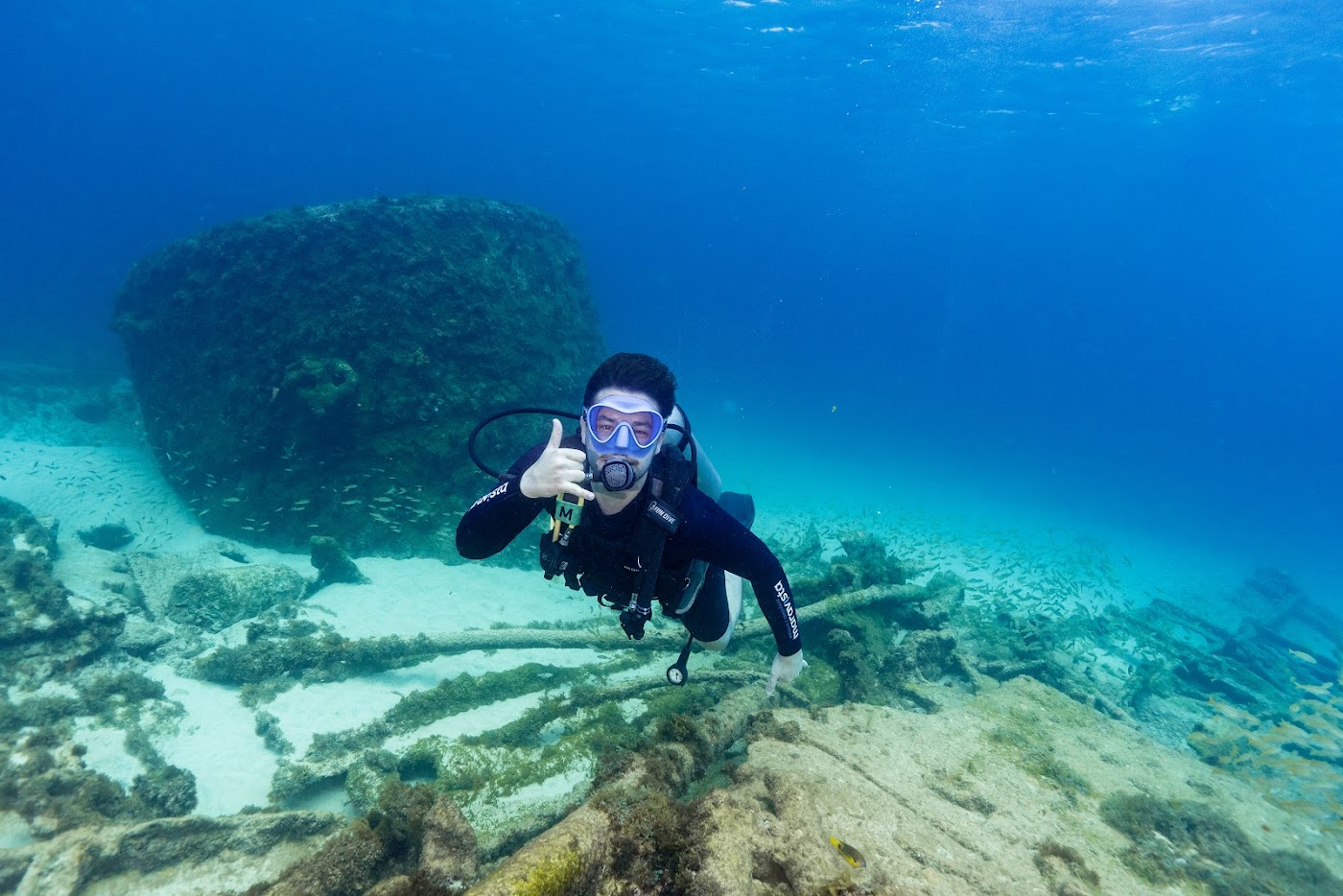
Fernando de Noronha is recognized worldwide as one of the best diving destinations on the planet. The combination is rare: crystal-clear water with visibility over 30 meters most of the year, a stable temperature around 26–28°C, abundant marine life and volcanic formations that create walls, caves and unique dive sites. It's the kind of place where you enter the water for the first time and never forget what you saw.
At Noronha's dive sites it's common to cross paths with green turtles, nurse sharks sleeping on the bottom, rays, giant schools of jacks and sardines, moray eels, octopus and — with a bit of luck — spinner dolphins and even lemon sharks. There are also wrecks such as the Corveta V17 Ipiranga, at around 60 meters — for many, the best dive in Brazil, but a technical dive that requires advanced certification and Nitrox: not for every certified diver.
First things first
Do I need experience to dive?
No. This is the most common question from people arriving on the island, and the good news is: you can dive in Noronha even without ever having put a tank on your back. What changes is the format of the dive.
Discover Scuba Dive
For those who have never dived. No certification required. You are always closely accompanied by a certified instructor — in the beach discover dive, each instructor looks after up to two students; in the boat discover dive it's one-on-one, one instructor per student. Minimum age of 8 years. You get a quick theory briefing, learn the signals and basic rules and go down to a safe depth to enjoy the experience. It's the perfect gateway to the diving world.
Certified Dive
For those who already hold a diver certification (SSI, PADI or equivalent). Certified dives let you go deeper, explore more challenging sites and visit formations and wrecks that the discover dive can't reach. Don't forget to bring your diver's certification card.
Options
Types of diving offered in Noronha
Within discover and certified dives, there's a second important split: whether the dive is done from the beach or from a boat. Each format has different advantages.
Ideal for the first contact. Entry from shore, no boat, with a dedicated instructor. Perfect for people who feel wary of the open sea or are traveling with kids from age 8. Each instructor accompanies up to two students.
Discover dive at sites accessed by boat, on the open sea. Descents at the most iconic sites on the island, with even richer biodiversity. Also no prior certification required. One-on-one attention: one instructor per student.
For certified divers who want to enter directly from shore. Good for exploring shallow sites and for those who prefer not to spend time on the boat.
The format that most explores Noronha's best sites — walls, volcanic formations and the Corveta V17. Two descents on most outings.
Where to dive
Main certified dive sites in Fernando de Noronha
Noronha has more than 20 certified dive sites — from shallow, calm reefs starting around 8 meters, to technical walls over 40 meters and the legendary Corveta wreck, at 60 meters. Below, the main ones, from shallowest to deepest:
Ressurreta (8–12 m) — Between Ilha Rata and Ilha do Meio, it's one of the calmest sites on the island: used for both discover dives and night dives. Groupers, barracudas and passing fish circulate here.
Ilha do Meio (up to 15 m) — Sheltered between the Mar de Dentro and the Mar de Fora, it's calm and extremely rich in marine life. Its small caves almost always hold a surprise.
Buraco do Inferno (up to 15 m) — The name is scary, but the underwater grotto is pure beauty: striking rock formations and frequent encounters with turtles, lobsters and octopus.
Buraco das Cabras (~15 m) — Volcanic rocks that shelter turtles, rays, surgeonfish, creole wrasses, corals, sponges and many schools of fish. A drift dive that starts in the Mar de Fora and ends in the Mar de Dentro.
Pedras Secas (~15 m) — One of the most famous sites in Brazil. The topography alone justifies the visit: corridors, canyons, arches, grottoes and caves where barracudas, rays, turtles and lobsters pass through.
Caverna da Sapata (~15 m) — A stunning cave, about 15 m high and 30 m long, where spotted eagle rays, groupers and other large fish live. Even with current, it welcomes both basic and advanced divers.
Morro de Fora (up to 16 m) — Close to Praia da Conceição, known for its concentration of fire corals. Moray eels, blennies, trumpetfish and pufferfish hide among the rocks.
Caieiras (~17 m) — Between three rock formations and full of algae, it's a resting and feeding area for turtles. Every so often sharpnose sharks, schools of fish and barracudas show up.
Cabeço das Cordas (17–33 m) — Currents bring in schools of jacks, creole wrasses and snappers. The shallow part, up to 17 m, is great for basic certified divers; advanced divers go down to 33 m.
Ilha do Frade (8–22 m) — In the Mar de Fora, in front of Praia do Atalaia, it charms with a great variety of fish, plus rays, turtles, lobsters and moray eels.
Laje Dois Irmãos (up to 22 m) — Off the morro of the same name, it's a certified-dive classic: turtles, spotted eagle rays and sharks show up easily.
Trinta Réis (22 m) — A small island in the Mar de Fora, in front of Enseada dos Abreus. The highlight is the passage through a canyon between two rock walls, with sharks, rays, turtles and large schools of surgeonfish and creole wrasses.
Cabeço Submarino (up to 23 m) — In front of Baía do Sueste, it's one of the most interesting formations in the Mar de Fora. The spiral ascent reveals lobsters, barracudas, turtles, many schools of fish and, sometimes, sharks.
Iuias (12–25 m) — Canyon and cave topography similar to Pedras Secas. Because it's deep, distant and with current, it's reserved for the more experienced — and rewards with plenty of fish and frequent shark sightings.
Cordilheiras (30 m) — Near Ilha da Rata, a breathtaking rock wall for both its formation and its marine diversity.
Cagarras (up to 34 m) — Very versatile: starts in sheltered water (even receives discover dives) and drops down walls that reach 34 m. Lobsters, octopus and rays are among the residents.
Macaxeira (40 m) — At the far north, in the Mar de Fora, with constant current leading to a wall of collapsed rocks. Then comes an algae plateau with jacks, horse mackerel, xiras, anchovies and spotted eagle rays, plus the famous Garden Eels — and, every now and then, nurse and lemon sharks.
Cabeço da Sapata (42 m) — A multilevel site recommended for advanced and technical divers. Deep down you find dusky groupers, black groupers, rays and, occasionally, sharks.
Corveta V17 Ipiranga (~60 m) — One of the country's most famous wrecks and, for many, the best dive in Brazil. The Navy corvette keeps its structure preserved, with items left by the crew inside. It's a technical dive: requires advanced certification, Nitrox and specific prerequisites — not every certified diver is qualified, so talk to us first.
The choice of site depends on your certification level, sea conditions and the tide of the day — we'll help you build the ideal dive for your profile.
Certification
Want to become a diver? Courses in Noronha
Taking your dive course in Noronha is one of the most transformative experiences the island offers. You leave internationally certified, with a card valid for life, and use the most beautiful dive sites in Brazil as your classroom. We work with the SSI and PADI certifications, the two most recognized in the world.
The gateway for those who want to become a diver in a short time. Internationally valid certification for dives up to 12 meters, always accompanied by an instructor or dive master. Ideal for short trips.
The most complete and recognized course in the world. You get certified to dive up to 18 meters with a buddy, anywhere on the planet. It's every diver's passport.
See all options at /en/courses.
When to go
Best time and sea conditions
Noronha has diving year-round, but the window from March to November usually delivers the best conditions: calmer sea, visibility around 30 to 40 meters and less swell impact. Between December and February there's a higher chance of rougher seas and slightly reduced visibility on some days — even so, many outings remain excellent.
A practical rule: dives are generally done at high tide, when conditions are more favorable. That's why the departure time changes every day — we organize this for you at the time of booking. See more in the guide to the best time to visit Fernando de Noronha.
Attention
Important safety rules
FAQ
Common questions about diving in Noronha
How much does it cost to dive in Fernando de Noronha?
The price varies by format — beach discover dive, boat discover dive, beach or boat certified dive. The updated prices for each format are on the tour pages (just click the links in this guide) and are also confirmed on WhatsApp before booking.
What's the minimum age for the discover scuba dive?
8 years old, for both the beach and the boat discover dive. It's the internationally recommended minimum age for a first contact with a tank in a controlled environment.
Do I need to know how to swim?
You need to feel comfortable in the water. You don't need to be an Olympic swimmer, but it's important not to panic in the sea. On the discover dive, the instructor is always right by your side.
Can I dive if I wear prescription glasses?
Yes. There are masks with prescription lenses and most operators have some prescriptions available. Let us know your prescription at booking so we can check availability.
How long before my flight can I dive?
The safety rule is: at least one full day (24 hours) without diving before your return flight to the mainland. For two dives on the same day, some agencies recommend an 18-hour gap — the most conservative option is always 24 hours.
Will I see turtles and sharks?
Very likely yes. Green turtles and nurse sharks (which are harmless and sleep on the bottom) are seen frequently on dives in Noronha. Dolphins, rays and lemon sharks depend on luck.
What's the difference between SSI and PADI?
Both are internationally recognized certifications and, in practice, equivalent. You choose based on the instructor, the learning materials and availability — not on the 'weight' of the name. Both give you the same lifelong card.
Can I take the dive course during my trip?
Yes. Scuba Diver is quick and fits short trips. Open Water Diver requires more days and is ideal for those staying at least 5 days on the island.
Keep reading
Related tours
Boat Discover Scuba
Your first time in the Marine Park.
Learn moreBoat Scuba Discovery Dive
A discovery dive by boat, with an exclusive instructor, in Fernando de Noronha's Marine Park. Depths of up to 12 meters, in one of the island's richest areas for marine life — turtles, moray eels, and other species may appear along the way.
Shore Discover Scuba
Your first dive, straight from the beach.
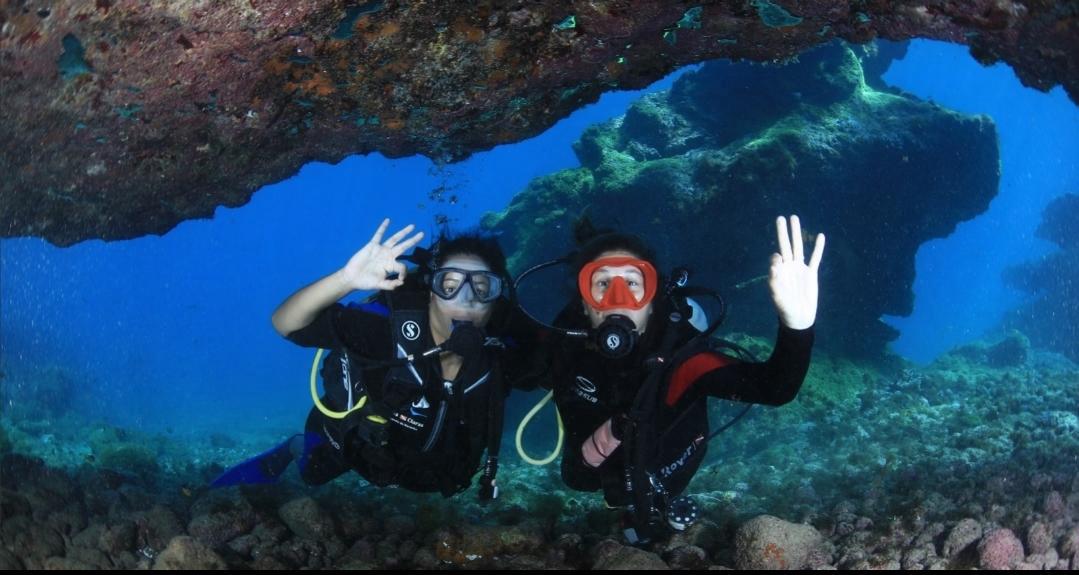
Learn moreBeach Scuba Discovery Dive
A complete 3-step experience — theory on the sand, initial in-water practice, and a real guided discover-scuba dive that can reach up to 12 meters, always with an instructor — in the calm waters of Praia do Porto.
Certified Dive
For certified divers — by boat.
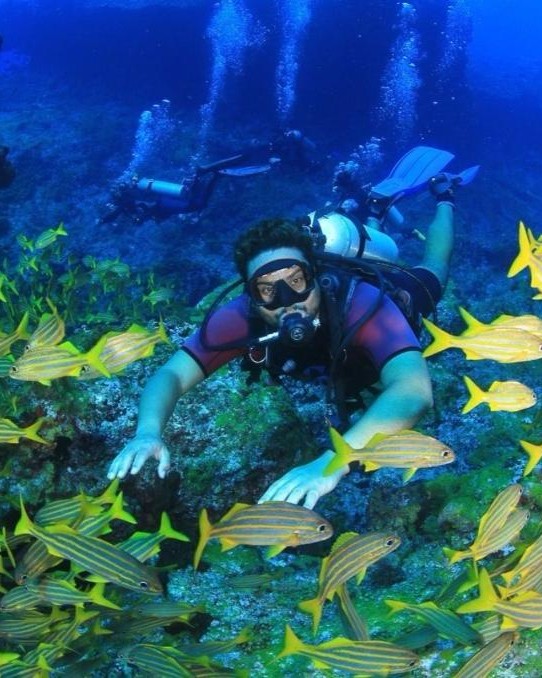
Learn moreCertified Boat Scuba Dive
A boat departure to Fernando de Noronha's main dive sites, in an operation certified by ICMBio and aimed at already-certified divers. Visibility among the best in Brazil.